

Airswimming: Barker Becomes Baker Who Becomes Free
NEWS | WEDNESDAY, MARCH 18 | BY FUSION STAFF WRITER, RUDOLFO CARRILLO
In Charlotte Jones’ play, Airswimming, actor Wendy Barker becomes Persephone Baker, who becomes Porph, a being of the imagination imbued with magic and optimism.
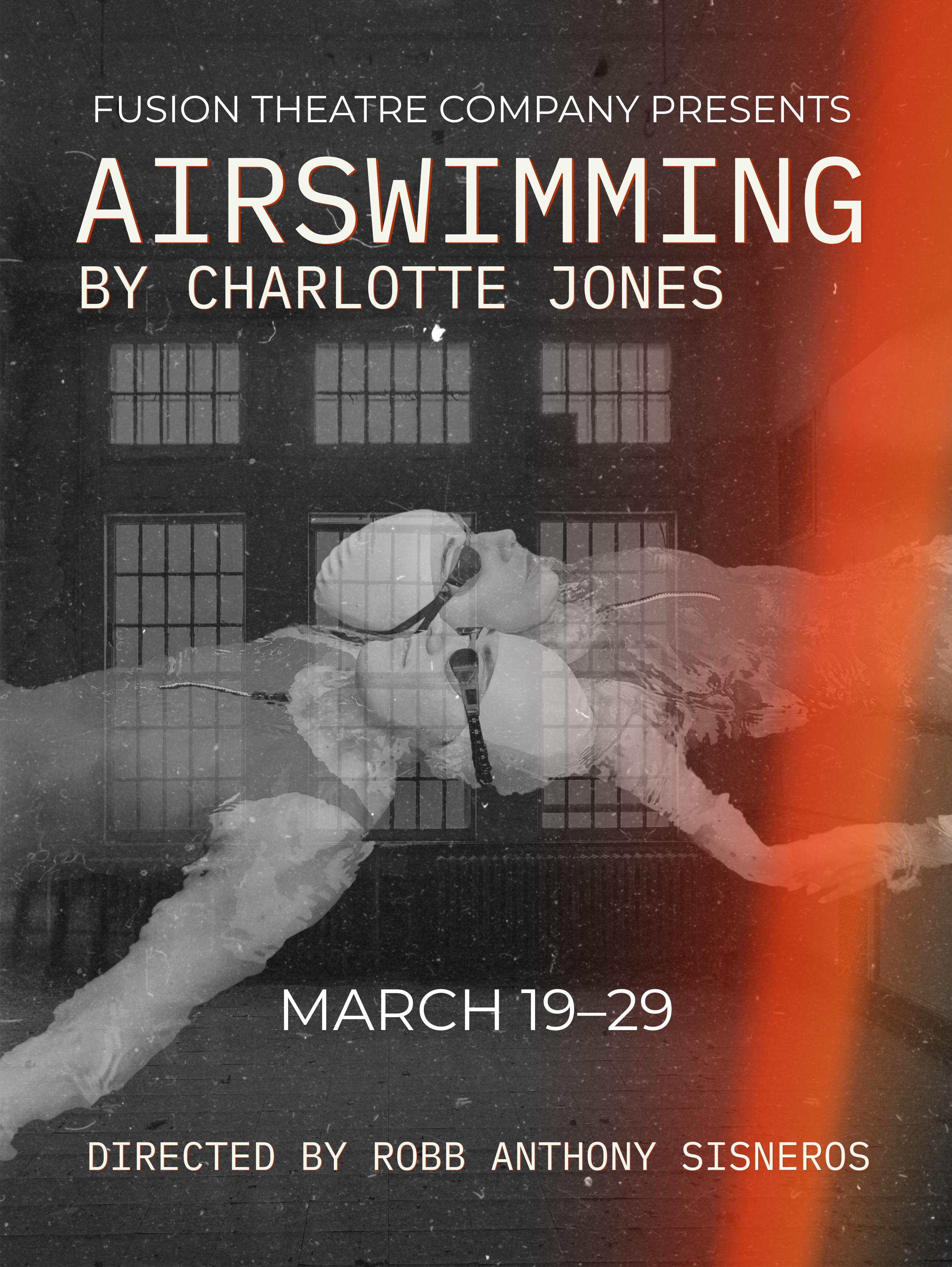
This transmutation, this transcendent transformation, is revealed to the audience as the slow hands of time tick away in the confined, yet hopeful, lives of two women committed to a mental hospital basically for being themselves. Though their lives and their identities are in conflict with the laws of the early twentieth century (In Great Britain), Persephone and her partner in imprisonment, Dora Kitson—played by Nichole Hamilton—find comfort, and a measure of freedom, as friends and compatriots searching for a way through a tragic world and toward the light.
The way they do this, the way they survive their horrible circumstances and live to finally walk toward actual freedom, comes through in the action and the mystery of Jones’ landmark tragicomedy.
In order to get a feeling for the texture and nuance of Persephone’s and Dora’s journey toward a better world, I had a deep and reflective conversation with Barker. We talked about the past, the present, and the future. The subject of mirrors, hope, and the passage of time also came up.
So, dear readers, listen in as Wendy Barker and Rudolfo Carrillo discuss the inner workings of a wondrous character in the midst of slyly comical yet altogether serious—existential even—proceedings brought to the stage and to life by a troupe of people committed to seeking the truth in an age when such demonstrations of community and perseverance can be dangerous.
Rudolfo Carrillo: How did you get involved in this production of Airswimming?
Wendy Barker: Well. I had not read the play. I didn’t know the play when Dennis [Gromelski, FUSION Executive Director] asked me to be in the show. But I love working at FUSION, always, and I try to fit it in, to make it work. In fact when I got his email, I saw that Dennis was writing me. I thought to myself, “I’m sure I can’t do it, I’m sure I’ll have conflicts.” So I waited until later in the day to read his email message. And then I read it and thought, “Oh, my gosh, those days on my calendar are open!” I was really excited about the possibilities! When I read through the script—and I’ve just been really intrigued lately with “meaty” roles, roles that you can really sink your teeth into—I wasn’t really sure where the play was going, and it took me a while. I read it five or six times before I started to get what the playwright [Charlotte Jones] was saying and what the play was about, how the two characters work together and what their relationship was.
What happened next, as you started rehearsals?
Of course, the director [Robb Anthony Sisneros] came to rehearsals with some great clarity. Then I began to put everything together.
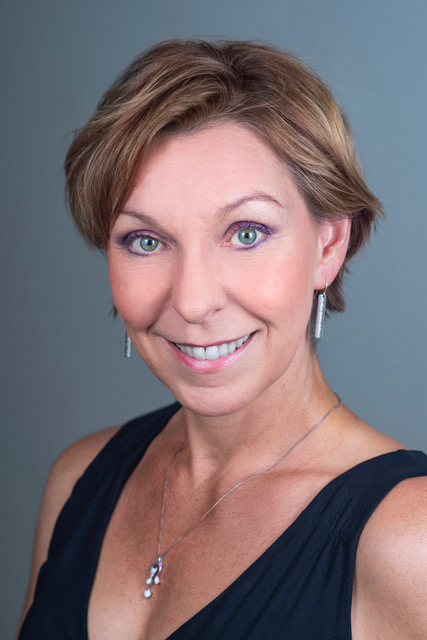
WENDY BARKER
Did that directorial clarity help shape your portrayal of Persephone/Porph? What else influenced that portrayal?
Yes because we’re playing these people at different points in their lives. There’s an age thing that’s really interesting to me, for both of us [actors Barker and Hamilton]. Additionally, there’s the set, the feeling of the set. For the entire span of rehearsals, we’ve had the set, in various stages of design and completion. It’s a very confining space, the place where these two people are. That fact really affected our rehearsal process. Having the set available this whole time has been a luxury; that confinement, that lack of places to go… so much happens in that little, simple, yet complicated and elegant set. That experience, the rehearsals, was affecting, for both performers.
Had you worked with Ms. Hamilton before this engagement?
A big part of my life is the Enchantment Awards, which is a high school musical theatre awards program that I have been a part of for ten years. We send adjudicators to high school musicals. Nichole was an adjudicator for our organization for a year or two, in Las Cruces (New Mexico). I knew her name, had heard about her work, but did know she was still acting. So I was really excited to work with her [on stage]. I’m very involved in the local theatre community; I’m part of a huge community. So to get to work with someone, who to me is brand-new, is always refreshing. I’m learning a lot from her. We have different ways of working; it’s been fun to try new things, to figure out how we come together. The characters in the play are so intimate in relation to their friendship, in the space they share.
Did that real-life excitement about working with Ms. Hamilton affect your portrayal and interactions in the play?
Yeah! So the interesting thing is that we first met at the read-through; we just started working together right away. In the past three weeks, we’ve had very little time to get to know one another, but we took a little time this weekend to get pedicures and drink some coffee together. We really got to chat. I’m really glad we got to do that, it makes the work of the show, of portraying the characters easier, better.
You said earlier that it took some time to ‘get’ the play, and surely your director and co-star helped with that process … as the play prepares to open this weekend, what do you think of Persephone? Who is she, really?
Persephone comes into this world, the world of the play, this place, as someone from high society who ends up in a mental institution. That’s not a reveal; that’s something that people know about, that the playwright wrote about. She didn’t need to be there; they didn’t need to be there. Their families had disowned both of them. So Persephone, in the play that Charlotte [Jones] created after reading a snippet of a newspaper article, is on the opposite end of things from Dora. They’re very different people, but this place [the mental institution] is their shared reality. In the middle of this, she finds friendship with Dora. That’s unexpected, I think, but they end up helping each other. We end up supporting each other, keeping each other alive! There is growth in Persephone; she evolves over time, she learns how to survive with Dora and Dorph. Dora encourages Persephone to use her imagination. That allows her to become the best person she can be under the circumstances.
Does that set of circumstances relate to ideas about surviving by invoking revolution in everyday life?
They have to survive; they have to be there for each other in order to survive. I think that Persephone is fragile, to start off, pretty fragile. She’s not really equipped to handle living in a mental institution. Being thrown into that [situation] means there has to be a level of imagination that makes sense to Persephone. Role-playing, creative story telling helps them through those tragic predicaments.
What do those survival strategies, those revolutionary moments, say to the audience, to the world of today?
Our world is always in transition. Right now, we think we’re facing the worst, but the worst is constantly happening. The world can get dark. I mean here we are, meeting on Zoom; we’re safe, we’re warm, we’re fed. But there are people who can't participate in that right now. Some are lost or locked up; they don’t know what will become of them. Their children have been taken away from them or their city is being bombed, and they are running for their lives. Horrible things are happening, as they always have. But we all have to continue to have hope and keep the world functioning as we try to help those people who can’t participate in what we take for granted. We are tasked with keeping the idea of peace alive. In the midst of knowing all this is happening in our world, we still have to embrace humor and take a break from tragedy. We have to carry on; if we don’t, it’s all chaos. In the play, in that world of two women, that’s exactly what they are doing. There is joy in that. The play is a mirror of sorts; it allows us to see what we all face in this life.
FUSION Theatre Company presents AIRSWIMMING
Thursday, March 19, 2026, 7:00 PM through Sunday, March 29 at 3:00 PM
FUSION | The Cell
700 1st Street Northwest, Albuquerque, NM
Performances will be from March 19–29, on Thursdays & Fridays at 7 PM, Saturdays at 2 PM & 7 PM, and Sundays at 3 PM. Opening night features a pre-show reception with doors opening at 6 PM!
Tickets here.