

May the Four Winds Blow You Safely Home
NEWS | FRIDAY, FEBRUARY 20 | BY FUSION STAFF WRITER, RUDOLFO CARRILLO
Way back in the 1980s, when I was coming up as a teenage punk rock writer in El Burque, my brother and I took a trip out to Santa Fe Downs to see the Grateful Dead perform.
As per our usual custom, we feigned solemnity, wore all black, and had our boots on when we descended upon a scene like none we had ever seen or heard before. By the time that fateful weekend in 1983 was over, our lives had been changed for the better, forever; we felt hopeful and energized by the colorful energy and plaintive harmonies flowing through the old racetrack outside of New Mexico’s capital city.
As we drove back to town in a beat-up VW bug we borrowed from my roommate Stuart, my brother shouted out the lyrics to “Franklin’s Tower”, urging us homeward as we took in the wonderfully profound and historic nature of what we had witnessed. It was more than a good time that we would never forget; our Grateful Dead concerts were events that would continue to influence our lives as we moved to the music around us, and would be a joyful part of a history that we could share with everyone we met in Albuquerque and New Mexico.
So, when historians finally get around to writing about this place, they should probably take time to note the special relationship our state, our city, and the West have with the Grateful Dead. Long considered a profound voice in American musical culture, the band has come to symbolize the hope and enchantment New Mexicans often feel as they dance nimbly through life’s triumphs and tribulations.
Besides lived experience, proof of the harmonious tie that binds us all together is evident in two important upcoming events here in the Duke City: Next week’s internationally acclaimed Southwest Popular/American Culture Association conference—to be held at the uptown Marriott Hotel—will feature a wide range of lofty academics from all over the world, including an entire section of researchers and scribes whose specialty is documenting and understanding a band of American musicians and the music they made as the Grateful Dead.
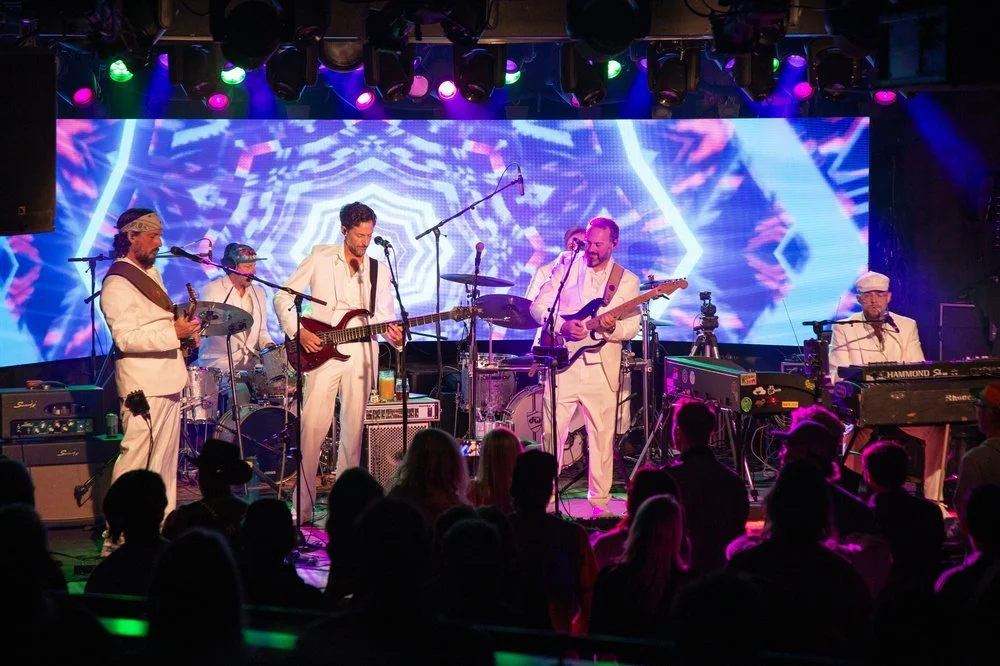
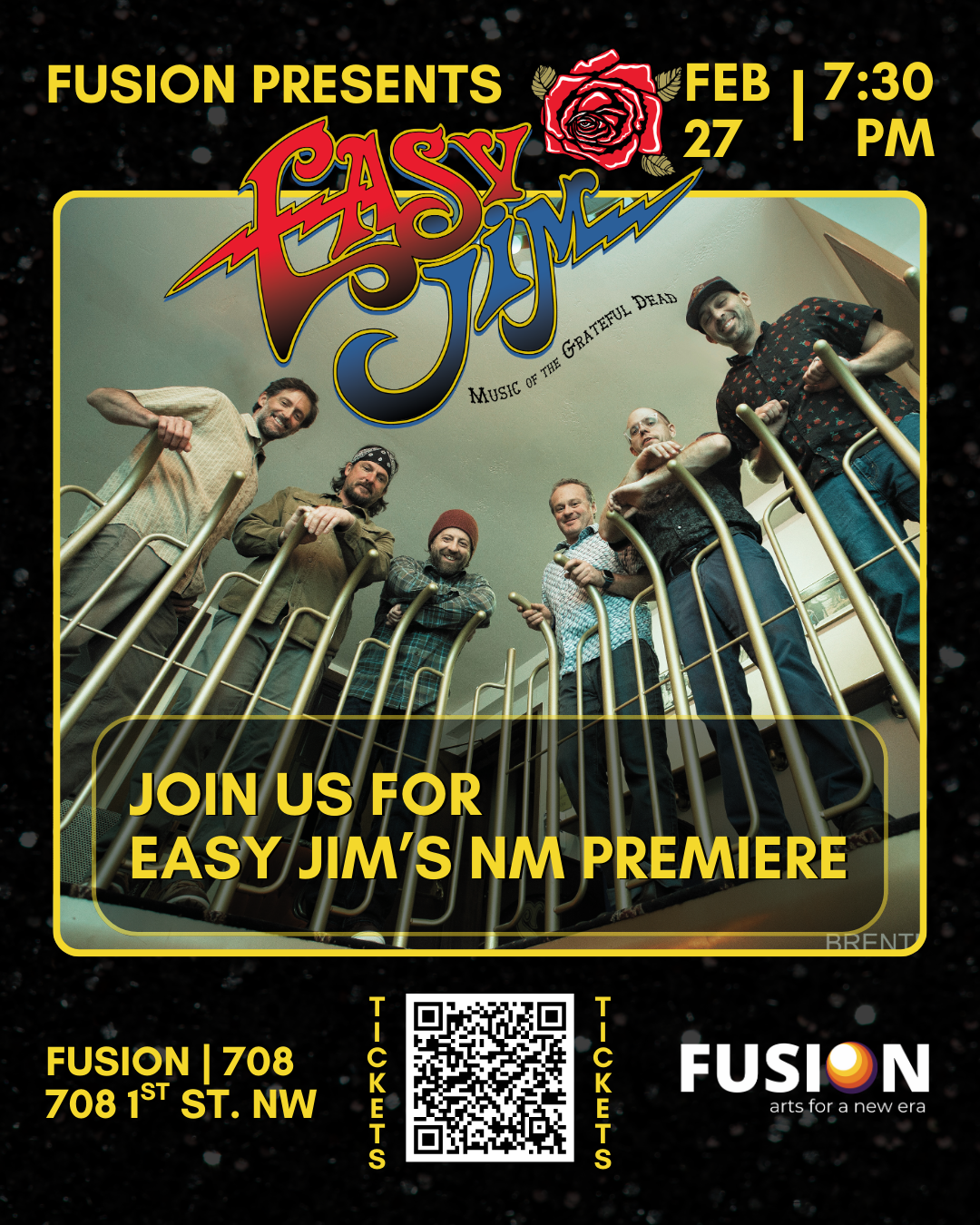
More importantly, Easy Jim, a Dead tribute band from southern Colorado and beyond, will perform at FUSION on Friday, February 27, at 7:30 PM, just as the aforementioned conference wraps up and hopefully, heaps of Dead-infused humans make the trek to downtown Burque for a concert with danceably historic ramifications.
FUSION has a storied tale of its own to tell, as a local venue that has long championed American music and jam bands. The intersection of such purposely positive and fiercesomely friendly forces is bound to be totally, historically universal and awesomely fun, even for old punk rockers.
In order to gain a deeper understanding of the tremendous sonic and cultural entities gathering on our horizon, I spoke to two Grateful Dead experts, Nicholas G. Meriwether and Ben Wright.
Meriwether is a scholar, the man behind such lofty literary series as Studies in the Grateful Dead (Duke University Press); he’s also in charge of the Grateful Dead contingent at SWPACA.
I also spent some time in the electronic aether with Ben Wright, who is one of the drummers in Easy Jim. Together they painted a picture that reminds me of a song about America, adding certainty to the chance I’d be gratefully in attendance at both events next week.
August March: Why are the Grateful Dead relevant?
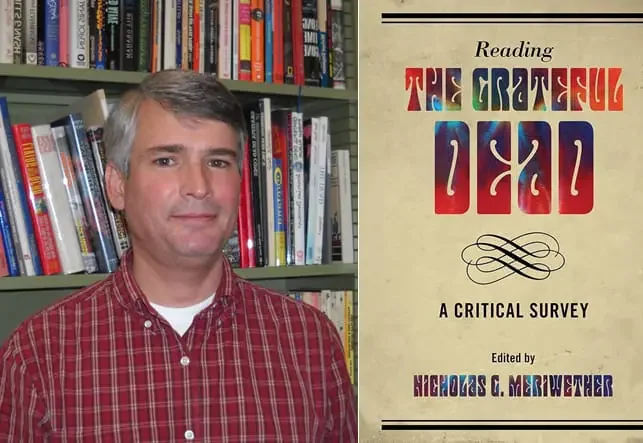
Nicholas G. Meriwether, author of Reading the Grateful Dead: A Critical Survey
Nicholas G. Meriwether (NGM): The band, the phenomenon, and their cultural impact have a 60-year trajectory. They were in Haight-Ashbury in the 1960s when it became a focus of popular media; that and books like [Tom] Wolfe’s The Electric Kool-Aid Acid Test cemented the Dead’s place in American culture. They’ve had a significant niche in the American consciousness.
When did the Dead become important to the academy, a thing to be studied at universities?
NGM: The dead have always been interesting to academics. Sociologists began paying attention to the Dead in the mid-1960s. The band members were intelligent, articulate, and thoughtful; Garcia’s death in 1995 caused an outpouring of scholarly interest in the band that continues to grow. SWPACA held its first [scholarly] sessions on the Grateful Dead in 1996.
How do contemporary musicians in popular culture contribute to this growing and sustained interest in the Grateful Dead?
Scholars, musicians and tribute bands like Easy Jim are part of the efforts to explore the band’s legacy. I would certainly call them fellow travelers. We’re doing our best with participants [in this year’s SWPACA Conference] to get the word out about Easy Jim; hopefully you all will have a sold out show!
That comment is a great way to segue into some words from Ben, the drummer with Grateful Dead tribute band Easy Jim, up in Crested Butte, Colo. Ben, what have you got to add to this melodious conversation about the Grateful Dead and American Music?
Ben Wright: I used to tour around Colorado with our bass player, Kevin Reinert, in a Beatles band. But we always listened to the Grateful Dead when we were on the road! Kevin is very knowledgeable about the Dead and their music. We were always saying to each other, ‘We should start a Dead band’. The pieces finally came together with that in 2018. The Grateful Dead community has been awesome to see and be a part of. Being immersed in such a community has been very cool for us, and it’s easy to see how the music resonates with people, how it is timeless. Musically it’s very interesting to study and play Dead music.
What interests you in studying and playing the music of the Grateful Dead?
It’s challenging music to play. What we enjoy about it in this band is the element of improvisation. It’s all about being in the moment, musically. Listeners are along for that ride with us; it’s a sonic journey. That improvisational aspect keeps it fresh for us, and for the fans. We have about 130 Dead songs in our repertoire, we never do the same show twice. That’s a great experience for everyone involved, that’s what I enjoy the most.
How popular is that experience? How has the Grateful Dead legacy grown over the years?
Speaking for Colorado, the scene is very alive and well. There are probably 20 Grateful Dead [tribute] bands in Colorado. Venues around here tend to sell out when those bands play. We have fans of all ages coming to our shows. We’re branching out, playing out more. Our show at FUSION is going to be our first appearance in New Mexico. Other than bluegrass music, this is one of the healthiest scenes in America! The Grateful Dead scene, as a [cultural] phenomenon, is impressive.
Obviously you all are deeply inspired by the Dead, but what makes you an unique contributor to their musical legacy?
We embody the music but also transform it. It’s really important for us in Easy Jim to put our unique stamp on the music. The music of the Dead is a living, breathing thing; it’s for everyone. We want to keep that idea going. We have the same instrumentation as the Dead, but don’t necessarily play specific roles in our performances. That’s another thing our audiences really like.
FUSION has long been known as a jam-band friendly, positive community resource in Albuquerque, what led you to this particular venue?
We’ve been interested in New Mexico for some time. We’re grateful to finally be playing in Albuquerque, in a venue that we know shares our values. We feel like it’s important to keep this cultural legacy alive, and playing at FUSION really contributes to that idea of what we think the band should be.
Easy Jim performs at FUSION | 708, 708 1st Street Northwest, Albuquerque, NM, 87102, on Friday, February 27 at 7:30 PM. Tickets are $20 and available here.
The 47th Conference of the Southwest Popular/American Culture Association meets in Albuquerque, Feb. 25 through 28. Details on this academic conference are available here.