

Sounds of Joy and of Sadness: A Jack County Line Update
NEWS | TUESDAY, JUNE 16 | BY FUSION STAFF WRITER, RUDOLFO CARRILLO
When I talked to JD Johnston, the heart of hearts behind Jack County Line, he wanted to talk about the group’s upcoming gig at FUSION on Sunday, June 21, from 2:30 PM until 4:30 PM. This is what he said, as light thunderstorms blew through town and the phone lines crackled with possibility: "What we want to do is to create a home for singer-songwriters in Albuquerque, a place where FUSION will be the place to go!”
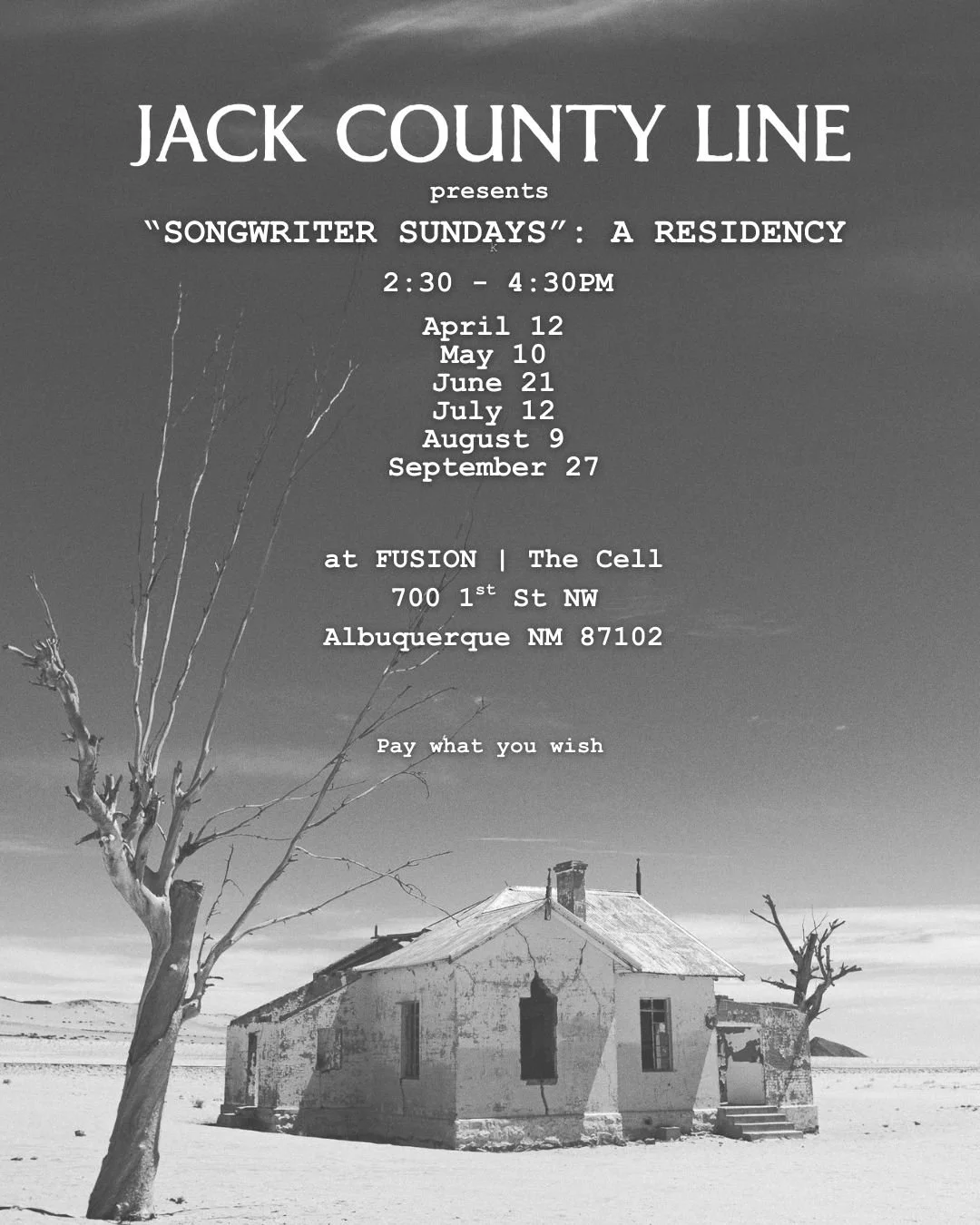
That may not be as tall an order as it seems, given the success Johnston and company have had with their monthly residency at FUSION. Audiences have grown from one iteration of the concert series to the next, and Johnston feels like this weekend’s offerings are going to highlight that trend while introducing Albuquerque music aficionados to two different sorts of alluring musical intensities: the personal and plaintive work of Jack County Line guitarist Michael Allison as well as the desert reggae-infused stylings of Tempe singer-songwriter Walt Richardson; Richardson will be joined onstage by his brother Levi and sister Lillie.
Johnston told this reporter that “Jack County Line will open, we’ll dive into some of Michael's work, then Walt will take the stage. There’s no intermission, and it will be a subtle but profound transition [from one act to the next].”
Reflecting on Allison’s storied tenure with the band, Johnston further recalled, “Michael’s a prolific writer. He’s probably written eighty songs in the past few years. We’ve recorded twenty of them. We’ve got a list; he’s one of the best lawyers in the city. I told him the other day, ‘What a shitty situation: too much good stuff!’” Johnston laughs and remembers that Allison called him up after that comment, the next day, and said, “Goddamnit, I wrote another one!”
Allison had quite a bit to say about his musical journey, his songwriting and his guitar playing ways that began when he moved to Austex to attend college in the halcyon days of the folk-rock movement in the middle of the 1970s. “When I got to Austin, I found what I perceived to be my home and my soul and what I’d been looking for, this was. I fell into the singer-songwriter scene down there. I started listening to live music at intimate venues, mostly…singer-songwriters, a guy or a girl with their guitar singing their own songs, and it just really entranced me. I became a disciple of that music. I’ve always played a little guitar. Nothing, nothing special. I don’t have any idea about the process or where it comes from. It just kind of happens with me.”
The real, alluringly listenable results of Allison’s mysterious musical process yield sounds that are complex, intense, and sometimes heartbreaking, but always compelling and worth infinitely repeated performance or listening. The guitarist has much to say about that, too, adding these provocative words to our recent conversation: “The songs are sad, rough to listen to for some people in some ways. I really don’t know how to write a happy song. I think sadness…I’ve thought about this a lot… You’ll never hear somebody that loves music tell you that their favorite song is some happy song. They’re going to tell you it’s a song about a broken heart, right? I write a lot of songs about broken hearts. I haven’t had my heart broken more than most people, but I just think that sad songs of this type allow us to connect to the most significant things in our lives. If a sad song evokes the fact that you were in love and that person broke your heart, the only way you can really revisit those feelings, you know, is through a certain sadness. That sadness takes you back to the significantly beautiful moments of your life.”
That sounds totally awesome, FUSION scouts! Allison’s personal, passionately plangent performance with Jack County Line promises to entrance, and after that, as Johnston noted above, Walt Richardson will come to the stage bearing an altogether different sort of tone, one developed in the Arizona desert while under the influence of reggae rhythms and social justice experiences.
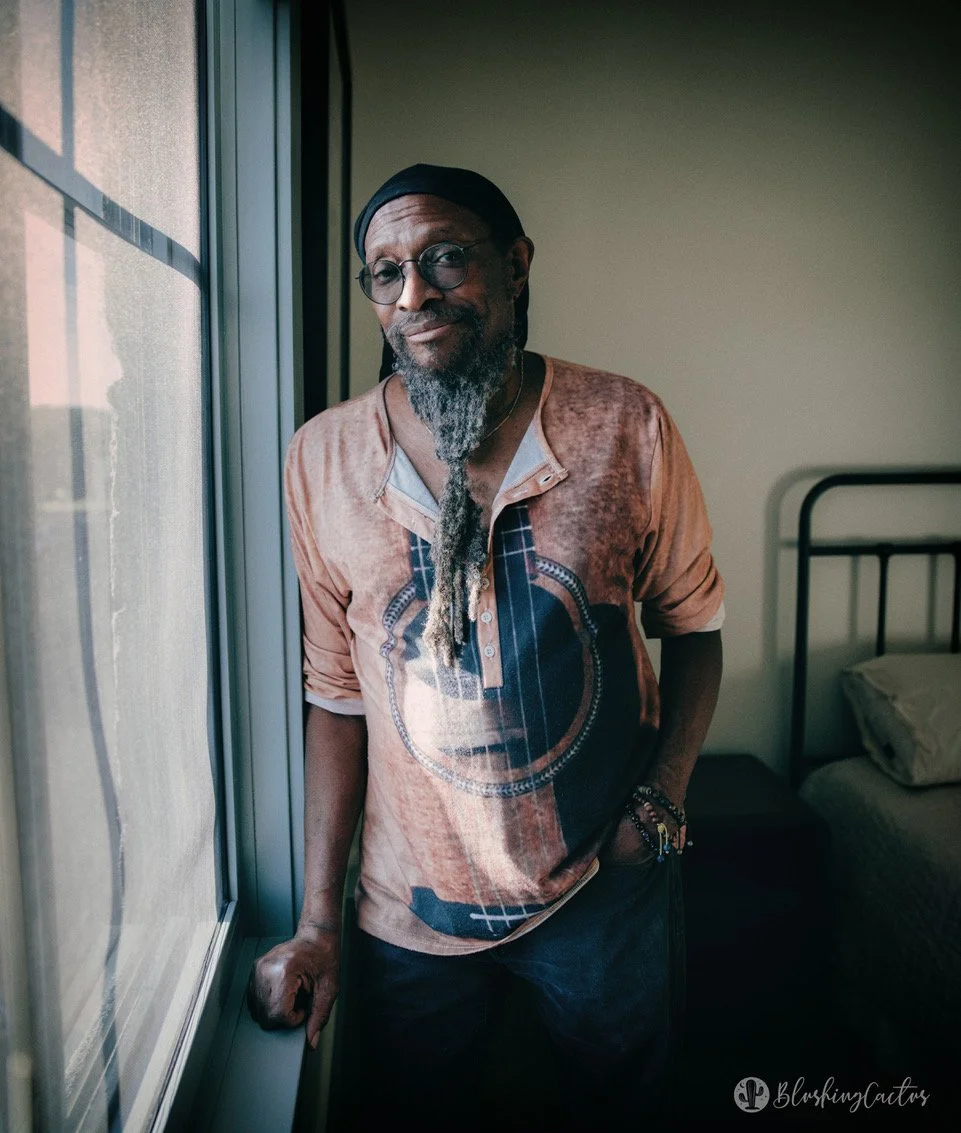
WALT RICHARDSON
When asked about his musical style and purpose, Richardson, who was also intensely engaging, began an intricate narrative that included the following passage: “People ask me, what kind of music do you play? And at this point in my career, I say hopefully good music, you know, because you’ve been through the gauntlet already, of all the kinds of possible things that can happen at a gig, on the way to the gig, and after the gig. You’re tempered, you’ve been through the fire. Basically, it’s pretty much an experience about storytelling in the songwriting. I came up in that era where songs were part of social movement, and that’s what attracted me to the power of communication, especially the human connection side of things. So I try to write from that kind of experience. How do we get through the hard places in ourselves and the hard spots and the challenging spots in society? I try to keep it on an inspirational side, but also mixing it with a kind of melancholy space and then moving the music into a place where we can see possibilities of helpful and connective outcomes.”
Richardson says it became easier to address such connections and inspirations when he embraced African music and the reggae beat: “Later on in life, in the ‘80s, I had a gentleman in my band who was from Morocco. And he was the first person in this area out here in Tempe that I met who had dreadlocks. I had never seen dreads before. He was in my band, and we were doing a lot of just singer-songwriter stuff, and he asked me one day, he says, ‘Hey, I want to teach you how to play reggae.’ I said, ‘OK, what’s that?’ He gave me five albums, two by Peter Tosh and a couple of them by Bob Marley. The third one of them was a Mutabaruka album. Everything changed when I got a hold of some reggae music for the first time. The challenge was I could feel the rhythm, and it was very haunting. It pulled me in right away, and it took my music to a different level where you started incorporating what I call the chant, the chant and the trance inside of music. Those first experiences with reggae brought me into an understanding of a lot of different kinds of African music. I put that first album on, and I’ve been on that track ever since.”
Well, there you have it, and you can have it both ways, whether your musical tastes intersect with the melancholy nature of human life, whether they exist as a persistently joyful backbeat with African roots, whether that music is introspective or communal, happy or sad, you can hear it all (or most of it, really) at FUSION when you attend the singer-songwriter residency hosted by Jack County Line. This month it’s happening on Sunday, June 21, at 2:30 PM. As JD Johnston reminded me as we concluded our weekly musical conversation, “We want to bring this music to the public through FUSION, let audiences experience how songs morph and grow, how the audience collaborates in setting the tone of a concert, how that entire creative process from first rehearsals to performance becomes a part of the community… It all comes from a place of love, from our hearts to yours. We believe in that idea.”
Jack County Line presents “Songwriter Sundays”: A Residency at FUSION
Sunday, June 21, 2026
2:30 PM - 4:30 PM
FUSION | The Cell
700 1st Street Northwest Albuquerque, NM, 87102
Pay What You Wish Tickets Here.
Stream the music of Jack County Line here.