

Stories of Sunshine
NEWS | TUESDAY, MAY 12 | BY FUSION STAFF WRITER, RUDOLFO CARRILLO
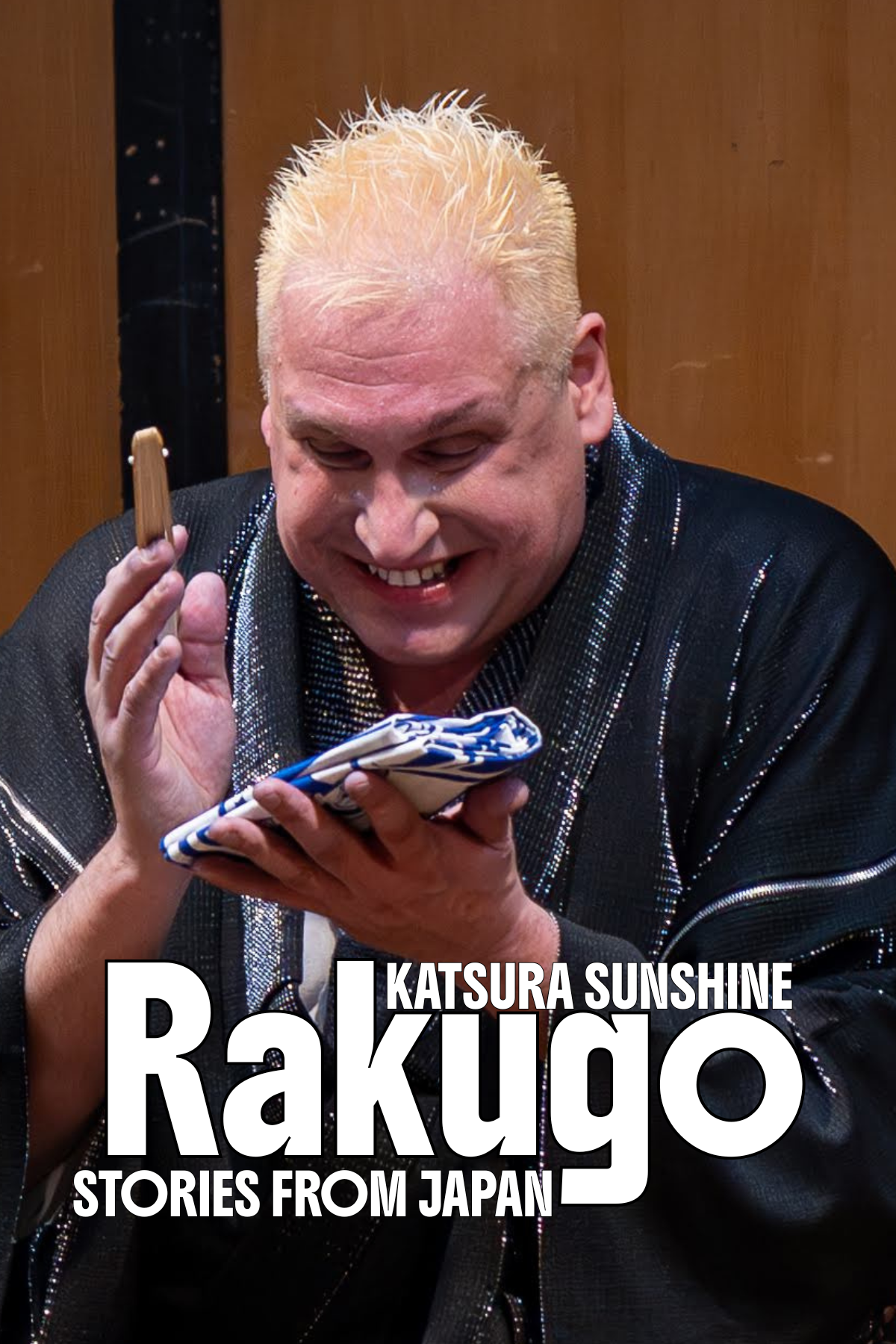
When we spoke over the internet, Rakugo artist and performer Katsura Sunshine ensured that I had an impressively compelling, fun, and educational experience involving Japanese culture; his knowledge of his craft and his confidence about his performances made sure of those situations. Katsura will be performing Katsura Sunshine's Rakugo: Stories from Japan at FUSION on Saturday, May 17, from 3:00 PM until 4:30 PM.
For one thing, I found out that the order of first and last names is reversed in Japan. So I would formally be called Carrillo Rudolfo if and when I finally affiliate with that particular island culture. That seemed sorta compelling, and appropriate, too.
I also found out more about the art/theatre form that Katsura has embraced over the past sixteen years. The format is called Rakugo and it’s very funny and very intense. Rakugo is a centuries old traditional Japanese comedic storytelling art form where a lone performer, the rakugoka, sits on a cushion and tells long, complex stories without standing up. Using only a folding fan (sensu) and a small cloth (tenugui) as props, the performer acts out all characters, differentiating them through voice, gesture, and head movements.
Sunshine and I spent the morning talking about Japanese culture, Rakugo, the popularity of that culture, and one of its notable manifestations in America. Our conversation, like the traditional form itself, was notable for its candid and entertaining format.
Rudolfo Carrillo: Can we talk about Rakugo?
Sunshine Katsura (Americanized version of the Japanese appellation Katsura Sunshine):
Sure. Rakugo is a 400-year tradition of storytelling in Japan. The stories have been passed down from master to apprentice through many generations up until the present day. The first part of a Rakugo set or performance is a lot like stand-up comedy. It’s the performer’s own material and some maybe self-deprecating humor; there are self-introductions and some other observational jokes, that kind of thing. While the storyteller is doing that, he’s kind of observing the audience to figure out what kind of story they might like to hear. In the second part, we turn our heads to the left, we play one character, we turn our heads to the right, we play another character; that’s how the story unfolds properly. Every story ends in a punchline, like it was a long elaborate kind of joke. These stories have been passed down; they’re 100 years old, 200 years old, 300 years old, and they come from Japanese culture. The stories are old tales of the neighborhood in Japan.
How did you get involved with and ultimately become a master of Rakugo?
I was always in theatre, so even just out of university, I was writing musicals and had an interest in ancient Greek theatre, Greek comedy like Aristophanes. As I was researching and working on Greek comedy, I actually had a small hit in Toronto with Aristophanes’ Clouds, done as a musical with music by Gilbert and Sullivan and music by Verdi and Rossini. And actually that was an authentic way of doing things, in that Aristophanes used to take songs from the famous tragedies, like Euripides, Sophocles, Aeschylus, et cetera, and he used to take those popular songs and do parodies of them, like Weird Al Yankovic, but 2,500 years ago. While I was researching Aristophanes, I read a scholarly article about the similarities between ancient Greek theatre, and noh and kabuki in Japan, which is more like four or five hundred years ago. I got interested in Japanese theatre and I went over to Japan, thinking I’d stay a month or two. Then just my third day there, I just got hooked.
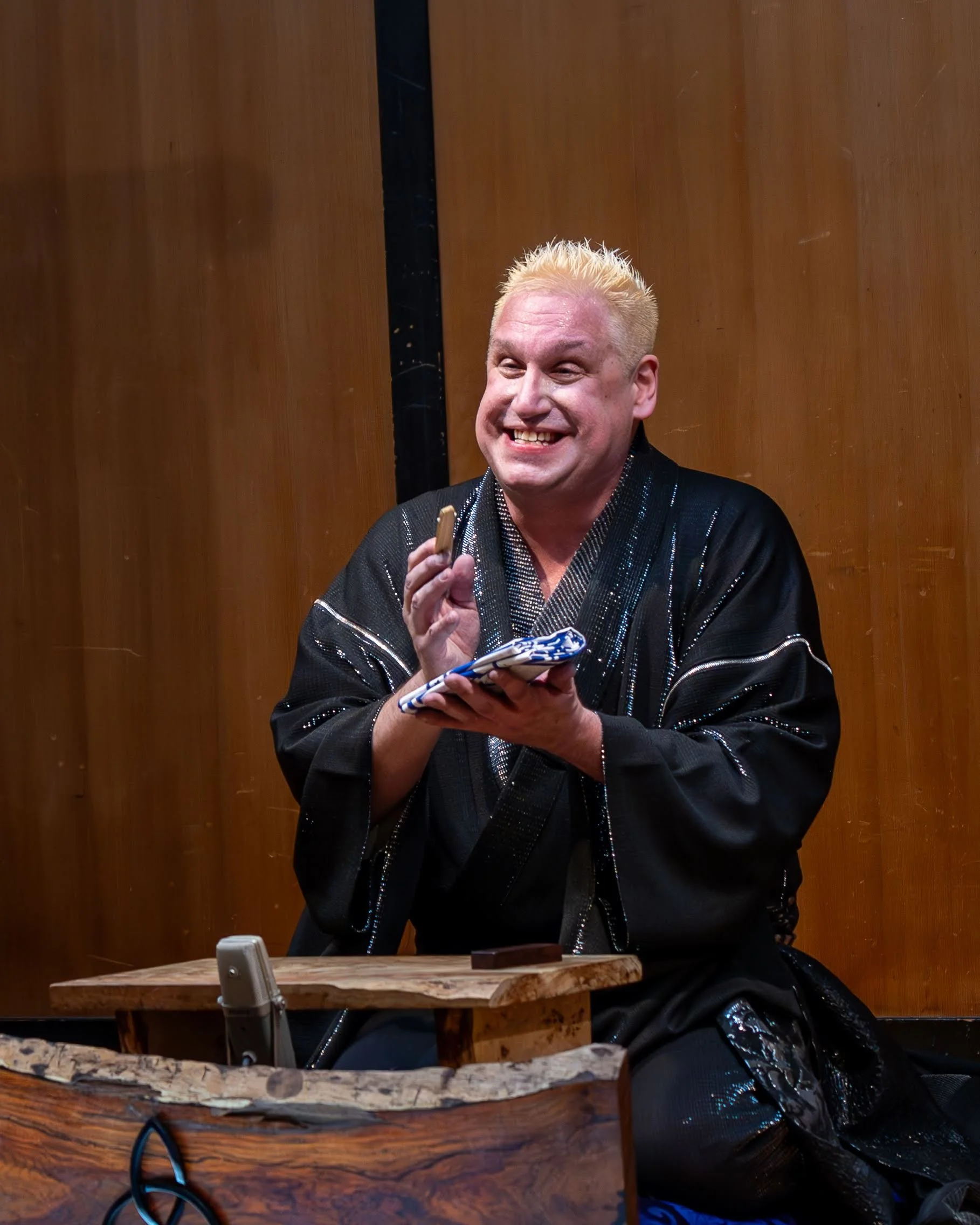
KATSURA SUNSHINE
What happened after that cultural revelation?
Because, this was like 28 years ago, so there was no Google, no YouTube, I couldn't really prepare myself for what was, you know, what Japan was really like. When I got there, I was just blown away. So I just stayed. Five years ago, when I could speak some Japanese, a restaurant owner who was fanatical about Rakugo invited me to a show, and the moment I saw it, I thought, “This is it; I gotta do this.” It really hit me.
What do you have to do to become a Rakugo storyteller?
You have to be accepted as an apprentice by a master, and it’s really like being in indentured servitude for, like, three, four years. You have to go to the master’s house every day, do laundry, cleaning, menial chores, carry his bags… He loses his temper with you every day, at least three, four times, and the master is very strict about things like being polite. So my master was very strict about learning that, which I’m glad he was, obviously. I think my Japanese got a lot better under the apprenticeship.
What direction did you go after your apprenticeship?
To be honest, I didn’t think my work would be this universal; I didn’t think people would enjoy it this much. I thought I'd be working mostly in Japan and then going abroad once in a while to do cultural presentations at the embassies and consulates of Japan, that kind of thing. But audiences seemed to just eat it up, and I thought, this is interesting. Then I got my brother and my best buddy to produce the last show of a consulate and embassy tour in 2013, in October, at a beautiful theatre in Toronto called the Winter Garden Theatre, a thousand seat theatre, one of the most gorgeous theatres I’ve ever set foot in. We rented it for one day, they packed it; it exploded, and people with no particular prior interest in Japan just laughed their heads off! It was at that moment, I said, “I got to get this in New York on Broadway!” In 2019, we started the once-a-month run that I’m still doing at New World Stages in New York City.
Finally, I want to ask you, what would you tell someone who heard about your upcoming show here in the desert southwest? Why should they come out? What, would they find interesting; why should they make a commitment to learning about Katsura Sunshine and Rakugo?
I always put it very succinctly: Come for an hour of laughter and leave with a piece of Japan in your heart.
Katsura Sunshine's Rakugo: Stories from Japan
Sunday, May 17, 2026
3:00 PM–4:30 PM
FUSION | The Cell
700 1st Street NorthwestAlbuquerque, NM
Tickets here.