

Swimming Through the Air, Towards Freedom:
The Director’s Cut
NEWS | SATURDAY, MARCH 14 | BY FUSION STAFF WRITER, RUDOLFO CARRILLO
What if you lived in a world where people—especially women and other marginalized humans—could be incarcerated for years and put into a veritable prison called a “hospital” for things like having a child out of wedlock, being gay, or dressing in fashionable clothes associated with the gender role they were most comfortable representing?
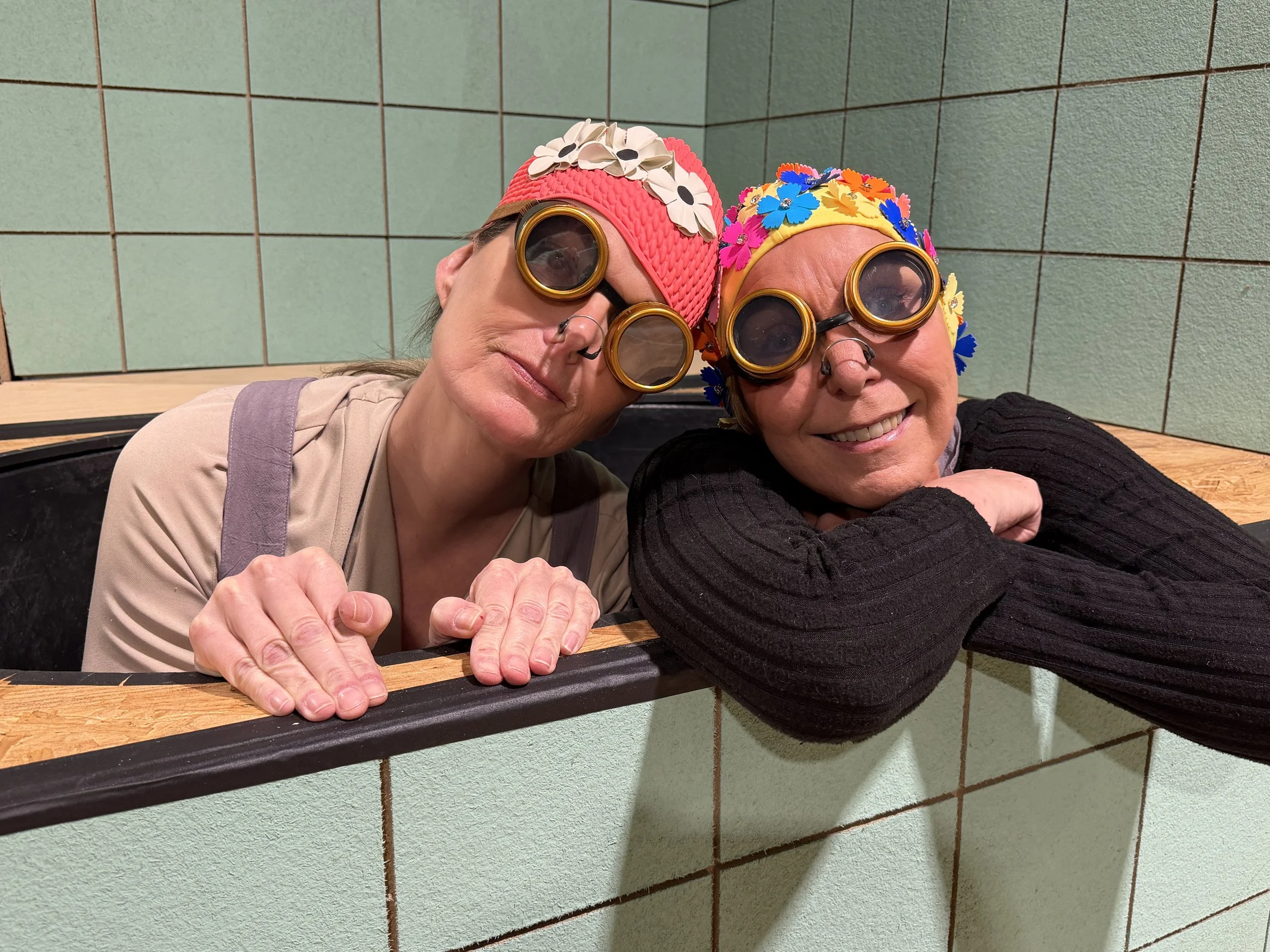
Wendy Barker and Nichole Hamilton star in FUSION’s production of AIRSWIMMING by Charlotte Jones.
Think about those ideas, those circumstances, for a moment as you take this mind experiment one step further. What if you were one of the imprisoned? How would you find your peace, muster the strength for continued resistance, and work toward some semblance of personal freedom and liberty?
The answer to those questions—and they‘re questions we must be asking ourselves now, as persecution against “outsiders” rages, as the missiles fly, as funding for programs promoting diversity and equality wane and our society seems ready to back track on 100 years of Civil Rights progress—can be found in Charlotte Jones’ darkly comic theatrical exposition, Airswimming, which is based on true events.
The play opens at FUSION for a two-week run on Thursday, March 19. The curtain rises on the world, described in detail above, at 7:00 p.m.
Airswimming is the story of Dora and Persephone, two individuals who—although imprisoned—find a fantastical, wondrous method for freeing themselves from a world that has systemically marginalized and betrayed them. The events that are played out in Airswimming actually happened in Britain during the years between the early 1920s and the 1970s, when the British judicial system and existing laws allowed individuals to be indefinitely ‘hospitalized’ for “moral” infractions.
Director Robb Anthony Sisneros told us that he was approached by FUSION to direct Jones’ tragicomedic look at the lives of two incarcerated women, Dora and Persephone, and their alter-egos, Dorph and Porph. “I hadn’t read the play before I was approached, but when I went through the script, what I loved about it was the bond these two women in the story had.”
Sisneros said he was moved by this depiction, and recalls, “When I really looked at this story, I realized that Charlotte [Jones, the playwright] had taken a rather small article [in the British press], less than a paragraph, I believe, about these two women who had been in an institution for the majority of their lives. The mind of Charlotte Jones, in creating the world in which the two women had to live, was very moving.”
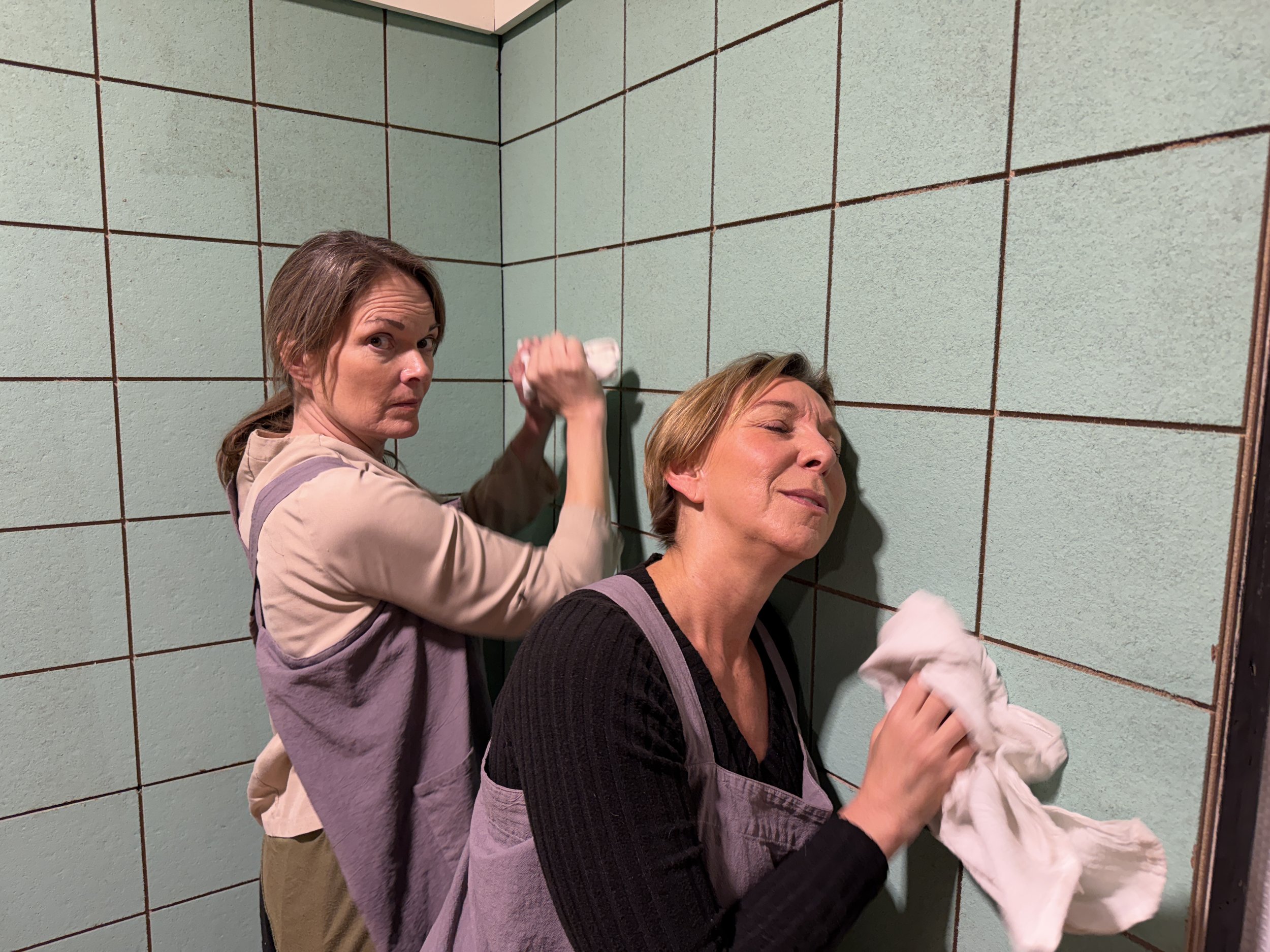
The research that Jones and then Sisneros did showed that, in real life, the two women’s families imposed the idea upon them that each was mentally ill, and that the legal system that existed in their era—a scant hundred years ago—allowed for their permanent incarceration as “moral” imbeciles. Sisneros told us, “Dealing with childbirth outside of marriage or feeling comfortable as a woman living in a man’s persona were grounds for forced institutionalization, yet these two women, in the playwright's mind, were able to create this bond, and beyond that, were able to support each other and help each other, much more than than the staff or medical personnel at their institution could. They were able to find their way through the monotony of decades of isolation that would drive anyone crazy, to be stuck in a hospital and abandoned by their families for being different.”
“This play gives us the opportunity to meet these women, to see how they supported each other, how they moved their lives into other chapters”, Sisneros reminds potential viewer participants, adding, “experiencing these two women' s stories, overlapping in time, overlapping in circumstance—they were from different worlds, one from upper-class society, the other from its opposite—gives us all the opportunity to understand them as human beings. That’s what drew me to this play.”
In order to make that world believable and even palpable to Albuquerque audiences, FUSION, through its in-house audition process, provided Sisneros with two very capable actors, Nichole Hamilton and Wendy Barker, to play the respective roles of Dora and Persephone, as well as their otherworldly, uncanny counterparts, Dorph and Porph. “I was very excited about the casting choices. Having worked with Wendy [Barker] before, I knew that she would be great as this intense character, Persephone, and would bring beauty to some of the acapella singing that is part of the script. I’ve never worked with Nichole [Hamilton] before, but the two have done a sort of bonding that mirrors the growth we see in the script. They’ve been able to get to know each other, hear each other’s stories. So together, they’ve created this world; it seems like a small cast, but the experience has created something much larger. I’ve watched these two characters come to life.”
Sisneros concluded by telling us how two sets of characters, one ostensibly “real” and the other—the fictive, magical creations of Dora and Persephone—come together to tell a tale of individual and community freedom and resistance undertaken in the most harsh and restrictive of environments. “The story is sad in terms of what these women had to endure, especially knowing that this play was inspired by historical events, but to see it unfold on the stage is an entirely different thing. You realize that this is dark comedy, but that there are moments of humor that we remember, that we highlight. We lean into humor because it's our survival mechanism. Ultimately, that’s how our two characters survive; not just by supporting the other, but by finding and exploring the humor in their own lives, within their own stories of being human. It’s our duty, as artists and performers, to not just find the dramatic, the dark, but to celebrate the light-heartedness that we need to survive.”
The director’s last words on the subject of Airswimming seem like great advice, especially during the challenging times we currently face. With those thoughts in mind, we hope to see you at the show.
FUSION Theatre Company presents AIRSWIMMING
Thursday, March 19, 2026, 7:00 PM through Sunday, March 29 at 3:00 PM
FUSION | The Cell
700 1st Street Northwest, Albuquerque, NM
Performances will be from March 19–29, on Thursdays & Fridays at 7 PM, Saturdays at 2 PM & 7 PM, and Sundays at 3 PM. Opening night features a pre-show reception with doors opening at 6 PM!
Tickets here.